
How to Find Your Skin Type: A Simple Guide and At-Home Test
My bathroom cabinet used to be a graveyard of products designed for oily skin. Foaming cleansers that promised to "de-grease," mattifying moisturizers, and a whole collection of clay masks. I had diagnosed myself as having "oily skin" because my forehead and nose were constantly shiny. So, logically, my mission was to obliterate that oil.
My "Aha!" Moment: The Skin Type Paradox
But my skin was a living paradox. While my T-zone was an oil slick by noon, my cheeks often felt tight, uncomfortable, and even flaky. My foundation would cling to dry patches on the sides of my face while simultaneously melting off my nose. It made no sense. Why was my "oily" skin also acting... dry?
The answer, which took me far too long to figure out, was that I had completely misdiagnosed my skin type. I wasn't purely oily. My aggressive, oil-stripping routine was making my already dehydratedskin scream for help, causing it to produce even moreoil in my T-zone to compensate. I wasn't solving a problem; I was creating one. The breakthrough came when I finally took a step back from all the products and performed the simple, foundational test that dermatologists have recommended for years.
Why Trust This Guide? I Corrected My Own Misunderstanding
This isn't just a test I read about; it's the exact method that ended my years of confusion. It gave me the clarity I needed to stop fighting my skin and start working with it. Knowing your true skin type is the most empowering first step you can take, and this guide will give you that confidence.
The At-Home Test: The "Bare-Faced Method"
This is the easiest and most reliable way to listen to what your skin is trying to tell you.
Step 1: Cleanse Thoroughly.In the evening, wash your face with a gentle, neutral cleanser. Make sure you remove every trace of makeup and sunscreen.
Step 2: Pat Dry & Do Nothing.Gently pat your skin dry with a clean, soft towel. And this is the most important part: do not apply anything else. No toner, no serums, no moisturizer. Nothing.
Step 3: Wait for 30-60 Minutes.Let your skin be. Let it return to its natural baseline state without any help from products.
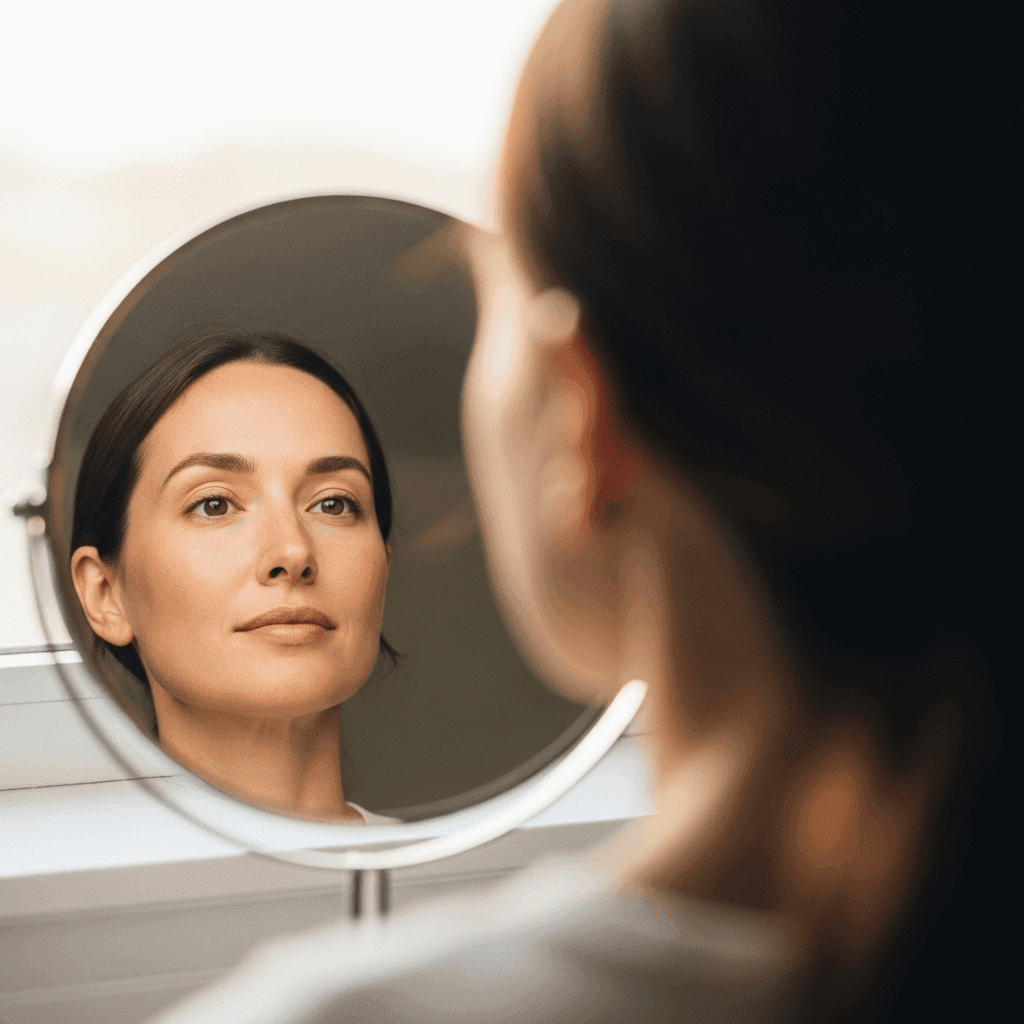
Step 4: Observe.After the time is up, go to a mirror in good lighting and take a close look. How does your skin look? More importantly, how does it feel?
The Results: What is Your Skin Type?
Now What? The Path Forward
Knowing your skin type is like being handed the instruction manual for your own face. Now you can stop wasting money and start making smart choices.
If You're Oily:Look for lightweight gel textures and ingredients like Salicylic Acidto keep pores clear.
If You're Dry:Your mission is to support your barrier. Look for rich creams with Ceramides, Shea Butter, and nourishing oils.
If You're Combination (like me):This is where it gets fun. I learned to use a gentle gel moisturizer all over but sometimes add a richer cream just to my cheeks at night.
For All Skin Types:Remember, any skin type can become dehydrated(lacking water). This was my exact situation.
Frequently Asked Questions (FAQ)
Can my skin type change? Yes, absolutely. And I've seen it happen to myself. I'm much oilier in the humid summer months and lean more towards "normal" with dry patches in the winter. Hormones, age, and climate all play a role. I recommend doing this simple test a couple of times a year, just to check in with your skin.
Is "sensitive skin" a real skin type? I believe it is. While any skin type can become sensitizedfrom a damaged barrier, true "sensitive skin" is a constant state. It means your skin's baseline is just more reactive than average. If this is you, your primary focus should always be on simple routines with gentle, fragrance-free products.
Final Thoughts
That simple, 30-minute test completely changed the way I care for my skin. It ended years of frustration and wasted money. It’s the kind of foundational knowledge that empowers you to tune out the marketing hype and become a confident expert on your own skin's needs. Now that you have this crucial piece of information, you're ready to build a routine that will finally work foryou, not against you.